Tuesday, May 3, 2016

A discussion about mitochondrial disease

For those of you that don't know or have avoided my obsessive rambling on the subject. Me and a group of 25 others will be attempting to break 6 Guinness world records on treadmills on May 27-28 at the Calgary Marathon Race Expo (in the Big Four building in Calgary, Canada). Myself, I will be running for 24 long hours and attempting to cover 260km and breaking 2 Guinness World Records along the way for the furthest distance run in 12 and 24 hours. Why would you do something so stupidly ridiculous you may ask? Well, simply, because I can. 


The human body is meant to move and use energy to propel itself for lengthy periods of time; that is if the body is functioning properly. So what happens when the body doesn't function well even at the cellular level? The most fundamental element of cellular function is found in these wee little things called mitochondria. Mitochondria are the power plants of the cell that produce, store and transport energy as needed to allow the cell to perform its regular function. When the mitochondria doesn't do its job, the cells lack function, and at times will fail, which can result in a significant impact on our bodies major organs due to energy deprivation. A common phrase used when discussing this disease is "Running on empty”. There are minimal treatments and therapies for mitochondrial disease and no cure. Ironically, exercise is the best proven therapy for this disease. When you exercise, you produce more mitochondria in each cell and significantly improve the mitochondrial function.
To produce the energy my body needs to run well for 24 hours, my cellular function will need to be close to flawless. Through methods of tireless training and smart fuelling I believe this stretch goal is attainable for me. 

For many who are affected by mitochondrial disease this feat would be impossible and even day-to-day function is a constant uphill battle. One of many impacted by this disease is Marsha Crossman from Regina, SK. Most see photos of Evan Penny and believe that mitochondrial disease is a children's disease, but that is not the case. Mitochondrial disease affects approximately 1 in 4,000 all ages, genders and races and carry a broad range of symptoms from lacking energy in day-to-day function to life threatening ailments due to major organ impact. Unfortunately due to the complexity of the disease, it is estimated that less than 10% of the people who have the disease are diagnosed. I asked Marsha to share her journey and story with us to better understand the reaches of this disease.


Q: Hi Marsha, can you tell me a bit about yourself?

Now 36 years old, I am proud to be Saskatchewan born and raised. Having lived in various small towns across the Province, I now call Regina home.  I have a great job, fun friends, and lots of hobbies.   I live with my super amazing hubby Jon and my step- daughter Jessalyn.  We are a very active family, involved in a quite a few local groups.  I enjoy nature, I love adventures, and I am an animal lover.  I likely have hundreds of photos on my cell of either my dog, or dogs that I have fostered.  In the past year I have become involved with MitoCanada, fundraising and bringing awareness to this great charity.

Q: When were you diagnosed with mitochondrial disease and can you tell us how that came about?

In a regular physical in the fall of 2014, my doctor checked off “CK” on a lab bloodwork requisition.  I had never had this blood test before, and I am really not sure why my doctor requested my CK levels be tested.  CK (Creatine Kinase) is enzyme your muscle secretes when there is severe muscle damage. CK can be found in the mitochondria. A normal range of CK, according to my doctor, is 35-139.  My first reading was 50,000.  I was called back to the doctor and questioned on if I was in any pain (specifically kidney and heart).  I said no, I feel how I always have. My “normal”.  My reading was requested again, and it came back with a CK level of 42,000.  I was referred to a local specialist (rheumatologist) who I met with several times.  He tested my CK levels once a week, slowly reducing exercise weekly until the final week where I had done absolutely no exercise.   My lowest reading was 1100 – still alarmingly high.
This specialist referred me to another doctor in Regina who did an EMG. An Electromyography is a diagnostic procedure to assess the health of muscles and the nerve cells that control them (motor neurons). Motor neurons transmit electrical signals that cause muscles to contract. This doctor was the first to record that I had a muscle disease.  I was then referred to the Calgary Neuromuscular Clinic. In April of 2015, I attended the clinic once for an assessment (had another EMG) and all sorts of other assessments.  A muscle biopsy was scheduled for May of 2015 along with an ischemic forearm test.    You have an IV in your arm and squeeze an object and they take blood at 5 min, 10 min and 20 min (approx.).    The muscle biopsy was a sample of muscle taken from my left quadriceps.  It required several stitches to multiple layers of skin, and fascia.
While waiting for the results of my muscle biopsy, I had an ultrasound on my heart, and an ECG electrocardiogram – measures the electrical activity of your heart done.  Both were normal.  I suspect these types of tests were done due to the fact that the heart is a muscle, and given that CK levels are high in victims of heart attacks, this was done to eliminate heart problems.
In June of 2015 I received a call from the Calgary Neuromuscular Clinic advising me that my sample showed “red ragged fibers”. When treated with a dye that stains mitochondria red, muscles affected by mitochondrial disease often show ragged red fibers — muscle cells (fibers) that have excessive mitochondria. At this time, the doctor diagnosed me with McArdle’s disease.   He also advised me I had a mitochondrial myopathy and was therefore referring me to a specialist whose focus is on metabolic and mitochondrial issues. 

McArdle’s disease is described as:
McArdle’s Disease is a rare, inherited condition that causes severe muscle pain and cramping. It is caused by the inability to produce an enzyme known as myophosphorylase, which is needed to break down glycogen. Without the enzyme, glycogen can’t be used to produce energy during exercise. Exercising through the pain can trigger severe muscle spasms or contractures, and leads to muscle damage. People with McArdle’s disease develop severe muscle cramps and fatigue in the first few minute of activity.  Muscle weakness and stiffness are also experienced.  The disease affects skeletal muscles.  It is not life threatening, rather is just takes learning how to adjust to it. 
With the two new diagnosis, I met with the next specialist and went through a few other tests, including a “jump test” and a process called Next Generation DNA sequencing.
In my case, my mitochondria dysfunction because of my body’s lack of ability to get energy to my muscles.  As I understand it, my mitochondria are overwhelmed and stressed due to not being able to serve their purpose, and that is to produce energy, in my case, to my muscles.
Mitochondrial dysfunction is a secondary diagnosis to my primary diagnoses, McArdle’s disease.

Q: How does your mitochondrial disease affect your day to day life? (This is a good time to continue on and share a story about daily struggles)

Some days  I have no energy, literally. 
One big impact this has had on me recently is that I was denied health crisis insurance.  This was a big reality check for me. 
I am told not do any weight training or anaerobic training including lifting and pushing.  It’s recommended that patients with McArdle’s disease do light aerobic exercise.  That sucks, because I want to do more.
I can’t do relatively “simple” tasks that require immediate muscle use like opening jars, carrying my stepper to my station in my fitness class, carrying heavier groceries, lifting anything heavy.  When I do, I get severe painful cramping and my muscles “seize up.” When I get off an airplane, I can start to feel the symptoms of McArdles in my legs before I get to the luggage pick up.
Most frustrating for me is when it comes to exercise.  There are some days I can go out and run with no issue after my body finds it’s “second wind”, and other days I can’t even run one lap around a track.   I would love to be able to run with a group as opposed to usually on my own at an unpredictable pace, depending on the day.  I live a healthy lifestyle, and I find it frustrating at times not to feel the benefits of all the exercise I do.
I now have to get bloodwork every three months to monitor my CK, kidneys and liver.

Q: I hear you have a tremendous support system. Who are these people?

I do!  I come from a very close family, who has always been a great support. Having been told that this is a rare autosomal recessive disease, this surprised all of us given we are all in “good health”. To have McArdle’s disease, both of my parents have to be carriers of the genetic mutation.  There is no known history in my family of this disease, which means they must be carriers only.
My hubby Jon has been the biggest support to me.  He helps me in so many ways – too many to list. He keeps me motivated to be active and understands the times I am just not able to be active.  He has been part of every step with all the medical stuff that has taken up a lot of our time.  Lots of conversations, lots of making fun of ourselves, and all the time and effort he has put into MitoCanada events, in support of me.  Jon is an ultra-runner, so I rarely get to run with him. But last November he surprised me with a trip to Vegas where he and I could run the Rock N Roll half marathon together (of course, at my pace).  That was a very special run for me.
My friends have been incredibly supportive as well – in particular Jen Ruland.  Jen has taken the time to take part in things that are very important to me.  Whether it be exercise, or her help with MitoCanada events.  She is very inspiring.
My fitness class friends and the marathon matters running club have also been very supportive.  They keep me motivated!!

Q: Speaking of motivational people, I hear you are running your first 50K soon. How is this possible? Tell us more!

Honestly, I don’t know if it is possible – but I am going to try just to see if I can do it.  It will be more of a walk/run trail race, but I am going to just go out there and enjoy no matter how long it takes me.  Of course, I consulted with the specialist I see in Calgary.  It will be bit of a test in that I am working on my threshold of what my exercise limit may be. There are certainly things I have to be mindful of and I won’t know how I feel until the day of.  Like any other runner, the run will be balancing act of proper warm up, nutrition, and energy.
 I hope that perhaps someone can be inspired that they can do the same as me, even if they are struggling with their own type of health issue.  I am very lucky to have the ABILITY to move, so I want to take advantage of that!  I am no doctor, but I believe that at this point in my life, I need to keep my muscles moving.
Running 50km will be hard on my muscles and my mitochondria but I am looking forward to the challenge.  My training consists of a weekly run, spin class, HIIT classes, boot camp, and walking.
Q: Any words of wisdom to the rest of us that tend to take our mitochondrial health for granted?

Try not to take your mito health for granted.  It seems like the body can be a scientific puzzle at times, and things can go wrong when you aren’t ready for it – so use your healthy mitochondrial  in a meaningful way J
I would absolutely love to be able to keep up with my running friends.   If I could, I would run and the time, but I just can’t.  So for those that do have the ability, use it, and be grateful for that.


Friday, March 11, 2016

The Running Injury Clinic

This is a running blog and to date I've kept it as such writing about racing, training, diet and pretty much everything running related in my life. I've kept my work life out of the message, that is until today. On March 18th I'm moving my Calgary massage therapy practice to the Running Injury Clinic in Glenmore Landing, needless to say this is a match made in heaven with the only question being why didn't I do this 5 years sooner. 

The over-arching goal of the Running Injury Clinic is education and development of injury prevention and rehabilitation programs for all runners and walkers through world class research and clinical practice. The overall paradigm is that all of the public seen at the Clinic can potentially be research subjects through various ongoing studies. Thus, their research is facilitated through the clinical practice and the clinical practice is improved through the research. The Running Injury Clinic's core strength lies in the scientific measure of 3D gait biomechanics, muscular strength, flexibility, and anatomical alignment and understanding how these factors contribute to running injuries. They have developed 3D GAIT, a scientifically accurate, 3-dimensional motion capture system and custom software, for use in private physiotherapy clinics and hospitals. Global partnerships with an array of researchers, all data from all systems flow into a central database making the world's largest research database of 3D biomechanical and clinical data.
  
I have been a full-time Registered Massage Therapist in Calgary since 2000. As my passion for running developed in the past many years so did my thirst for treating running related injuries and understanding the complex biomechanics of the running stride. Not only did this heighten my running abilities but in turn transformed the way I treat the human body when it comes to the stresses that a runner's training model will deposit on the body's soft tissues. The training methods of successful runners are innately aggressive and only stands to reason the treatment of the coinciding issues arising with this repetitive sport be equally aggressive in nature. My passion for this sport we all share would be a waste if I kept this to myself, whereas by treating in a clinic like the Running Injury Clinic and helping other runners achieve their running goals seems to me like a life well lived.

From this point forward I will be using this blog to present to you the cool and relevant studies and findings the Running Injury Clinic's research concludes only adding to the valuable wisdom already found out there. 

Swing on by and check us out. I'll be in the office accepting new patients Wednesdays, Fridays and Saturdays.

403-460-5642

Friday, January 15, 2016

Announcement of the Guinness World Record attempt

At the Calgary Marathon launch party
I am super excited to announce that on May 27th at 4pm to May 28th at 4pm I will be attempting to break the Guinness World Record for 'Longest distance run in 24 hours on a treadmill'. The record was set by Suresh Arulanantham Joachim in 2004 with a distance of 257.88K. I feel this number isn't too far off as this past April in Turin, Italy I ran a personal best and new Canadian record 257.093K although the thoughts of compiling such a number bring back painful memories of the anguish and drive enclosed in doing such a thing. Given my limited treadmill experience friends have told me that treadmill running is  easier than road running, guess we will find out. Also the 'Longest distance run in 12 hours on a treadmill' stands at 131.35K, I hope this record might go down on race day as well as my 12 hour split in Italy was 134K.
Founder of MitoCanada Blaine Penny and his son Evan Penny

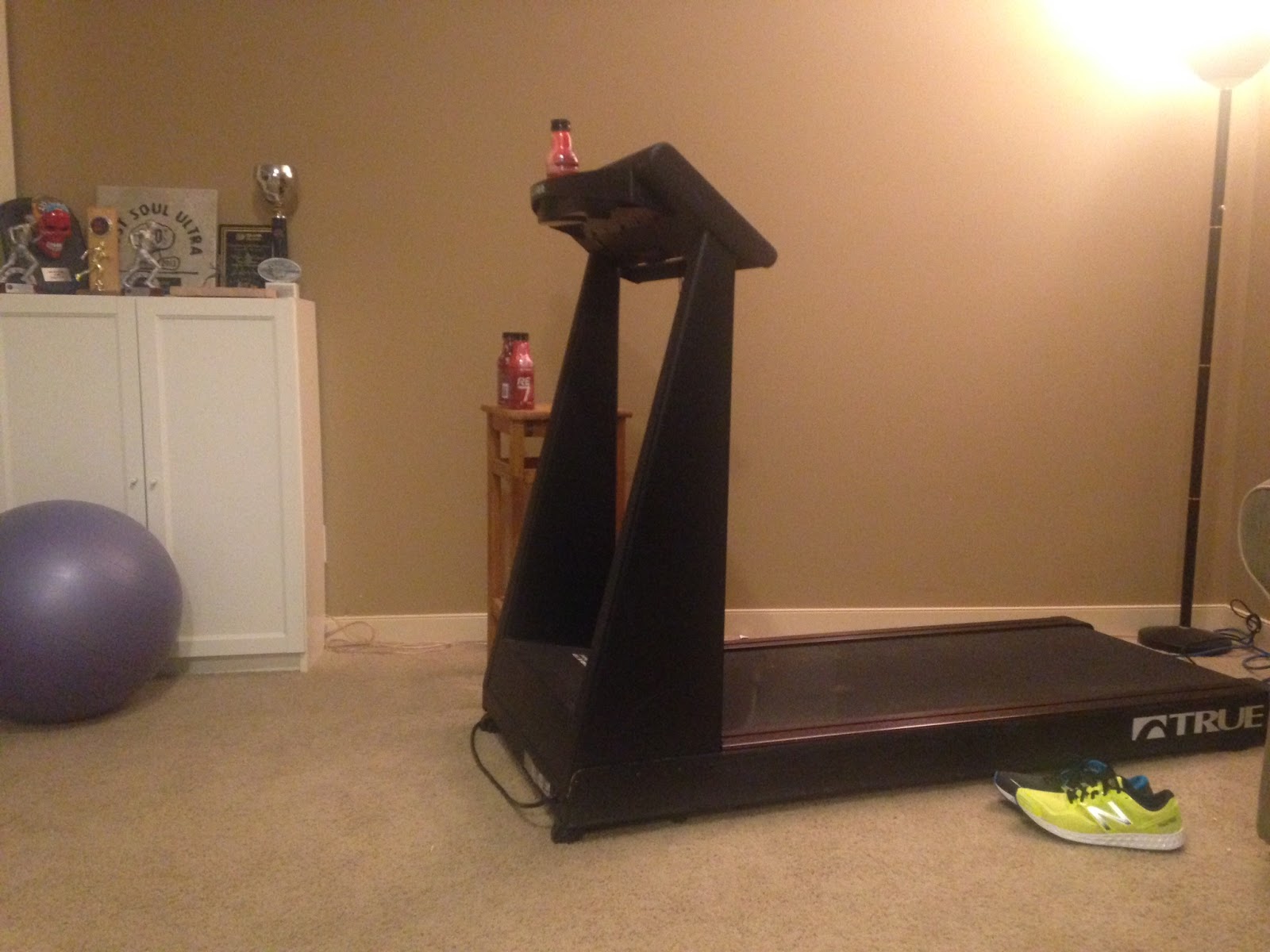
My longest run to this point on a treadmill is 30 minutes, needless to say, I've got some work to do. I bought a treadmill...thanks Joanna. I'll heal up this damn knee and get to work turning this brain to mush and get use to the monotony of marching on the spot for endless hours, sounds like fun huh?!

Alissa St. Laurent
This record will be attempted at the Calgary Marathon Expo during the days approaching the 2016 Calgary Marathon. The Marathon management group has been more than accommodating and has bent over backward to see that this attempt is a success. Alongside me we will have 5 other treadmills attempting 5 other GWR's. The ultra phenomena Alissa St. Laurent will take a crack at being the 'Fastest 100K run on a treadmill, female'. Beverly Davey will be attempting the 'Longest distance run in 24 hours on a treadmill, female'. A group of 12 fast dudes from the Bow Valley Harriers will be attempting the 'Treadmill, distance run in 24 hour (male team)' and a group of crazy speedy chicks will attempt the record for 'Treadmill, distance run in 24 hours (female team)'. All together it'll be one hell of a show, come on by and bring your popcorn! We also plan to have an open treadmill for the public to hop on and off, running the paces of us record attempting individuals. My average pace will be 5:30 min/km for the entire 24 hours; talking about it sounds easy but I know getting going at that pace will bring a very real hurtful feel of what an attempt like this will take.

My pain cave
All of this is very exciting but is just touching the tip of the iceberg for the reasoning of why we are doing such a crazy thing. One name, MITOCANADA. All 27 of us will be running with one goal in mind: to raise funds and create awareness for children and families afflicted with Mitochondrial disease. Mitochondrial disease refers to a group of disorders. Each of these conditions involves a problem with mitochondria. Mitochondria are tiny structures inside almost every cell in the body. Their main job is to use the food and oxygen that enters the cell to make energy. Almost all the energy your body needs for daily life and growth comes from mitochondria. When mitochondria fail, less and less energy is converted in the cells. The cells may stop working or die. Depending on where the affected cells are, parts of the body may not function properly and many health problems can result. At least 1 in 6000 people have Mitochondrial disease.

That being said, I can't think of a better reason to do something crazy like this. Stay tuned cuz more and more details will come as they become available.


Tuesday, January 5, 2016

Across The Years

photo by Jamil Coury
What a success!! We raised $13,000 for Care for Rare and I stumbled upon the best running moments I've ever had even after realizing my race goal was well out of reach.

Like most ultra marathons the race began well after the initial gun. At the 100K mark on this looping, flat, one mile course I felt comfortable and in control. My watch showed 9hrs25min and already the sun had gone down in the desert; a quick change into warmer clothes I was off to run another lap.

Adele
My goal going into this race was a bloody lofty one, it was to break the Canadian 48 and 72 hour records. To do so I'd have to run over 500K but I felt this number was well within reach. My wife Sharon and brother Dan tag teamed crewing responsibilities which kept me rolling along, well fuelled and motivated along the way. In the middle of the night I surpassed the 100M mark in 16hrs35min. At this point I was right on pace and found the effort was that of a "controlled effort" much the same as marathon runners don't want to overextend themselves in the first 10K of the race. At 2:00am I found myself oddly sleepy so I decided to take an early one hour nap to get ahead of my sleep. This was the first time I had ever slept in an event and to be honest it went horribly. I was cold, legs were shaky, and my mind would not shut off! I spent the next hour half praying to fall asleep and the other half pissed off to hell that I was wasting my time lying down when I could be out there running. When getting up from my nap I was alarmed by how quickly the running felt comfortable again and within 30-60 seconds I was back up to my regular 6 min/km pace. The rest of the morning went very well as I allowed the natural slope to continue eating away at my pace but at this point I wanted to run by feel permitting a forever pace with no effort expended. If the effort heightened, the pace decreased, its really that simple.

Dan, Laura, me, Randy(dad), Nancy(mom), Sam, Adele, Julia, and Sharon
The month prior to the race I was dealing with a minor left medial knee issue and as the first day came to a close I was content that the pain and discomfort stayed at bay, the niggle was there every step but never seemed to get worse throughout the day. Nine AM rolled around drawing a close to the first day and I was right on pace. Day one I ran 130 miles or 210K. My kids and parents showed up at 11:00am and that brought a beaming smile to my withering face. I really looked forward to making my way back after every loop to see their beautiful faces but an hour later my eye lids drooped and I felt I needed another nap since I got next to nothing for sleep the previous night. Again I roll into the tent for a one hour nap and like before it was another wasted mess of an hour stressing that my mind would not rest, thinking that slumber was a minute away but an hour passed and still no sleep. I knew this would all catch up with me sooner than later and as I left the tent I was red in the face knowing that I wasted yet another hour with nothing to show for it. The next 5 hours flew by running my new 6:30-7 min/km pace, fuelling very well and feeling in control. I couldn't wrap my head around the growing problem of sleep deprivation running and the unfortunate timing of finding out that this might be my new nemesis. Our friends and fellow runners Lisa Miller and Al Wong suggested I sleep in their EuroVan where it was warmer and quieter. At 5pm I laid my head for what I hoped would be a successful and much needed rest. I ran out from that van only an hour later wanting so bad to drop kick a palm tree;AGAIN I got no sleep! Filled to the brim with anger and anchored by disappointment I ran on.

me and Sharon
Around 8pm day two, 35 hours into the race I stopped for 5-10 seconds to grab some food. About 10 strides away from the tent I felt a nasty stab in my inner right knee. There was a building tightness the past 6-8 hours but I didn't think much of it, that is until it stopped me dead in my tracks. I walked back to the tent and immediately started rolling it out hoping it would help but knew it wouldn't. I made my way to the medical tent and already noticed the swelling building in in my knee. I laid down for one hour with my knee elevated with an ice compress. Sadly, now that it didn't really matter, I slept like a baby. I awoke an hour later and the inflammation was worse then before. Standing up, hardly able to bend my knee, knowing that the record was now out of grasp, Sharon, Dan and I drove back to the house to spend a night in a comfortable bed. I awoke the next morning with a big breakfast with the kids. To my surprise the feelings of disappointment didn't overwhelm me, in fact the joy of having all my family there was just what the doctor ordered. I spent time walking back and forth between the hot tub and the cold pool and that did the trick to knock off enough inflammation to get me excited to get back to the track to loop the course a few times with my family. You see, before when my goal was to break the record I was told I wasn't allowed to run/walk the course with my kids as they would act the part of a pacer thus disqualifying me. Now with the record out of hand pacing was fair game.

Sam
Julia
When I returned to the course I slowly walked hand in hand with each of my kids, my parents, my brother, sister-in-law, and Sharon. After completing these laps both Sam and Julia wanted to do another loop and even with my knee aching how do you say no? We were like an army, all wearing our Care for Rare t-shirts all marching for the cause. My kids experiencing the sport that I love and gathering invaluable one-on-one experiences as we walked the course with all members of my family. Now those are memories worth holding on to. We left the course for dinner at the house and had some fun with the kids before putting the younger two down to bed. Afterwards my dad, brother, and I took to the hot tub. Once again the contrast bathing between the pool and hot tub did the trick and I felt like I could walk some more laps. My brother and dad informed me that I was still in first place and if I returned to the course and walked another hour or two that might just be enough to take home the
Dad and me
win. To be honest I wasn't too motivated at this point to go after the win, my goal was to break the Canadian records and it seemed almost rude to all the strong runners still out there to go back to aimlessly walk a few extra miles to push the lead further out of there grasp. Before going back to the track Julia (age 9) urged me to go back and fight for first place and in fact she would walk with me every step if need be to get me there. With such persistence coming from a nine year old how could you possibly deny her of this opportunity. So at 10pm New Year's Eve we arrived at the course and I walked hand-in-hand with Julia. The clock struck midnight ringing in a new year. I celebrated with Sharon, Julia, and Dan and just kept on walking. My knee started buckling around 1am and that's when I called it quits. My total mileage was 202 miles. I returned to the course at 10am the next morning to find out a lady by the name of Jill Hudson surpassed me by logging 205 miles but my 202 was good for first place men's.

Thanks to Aravaipa Running for putting on a world class event, to all my sponsors: New Balance, Gords Running Store, Thoz Barz, and RE7, but mostly to the love of my life Sharon Proctor for your unwavering support and relentless enthusiasm. You rock babe!

A massive thanks goes out to everyone that supported the Care for Rare cause. Raising a child with an undiagnosed rare disease has its challenges but knowing that we have a whole amazing community of supporters backing us along the way is a pretty stellar feeling. Your donations will go a long way to supporting families  steer their way through the diagnostic abyss.

Lots of love.


Saturday, December 19, 2015

From the Better Half

Hi, my name is Sharon and I live with an ultra-addict who goes by the name Dave Proctor. This is a man who does nothing in moderation; he does not understand the meaning of enough. He is obsessive, a control freak, and worst of all…no, best of all he thrives to push further stripping the idea of limitations.

And I love him for it.

Many have said they admire Dave for his running efforts and are inspired by him. Truly he is an amazing athlete deserving of recognition (Dave’s head just got a little bigger right there). However I am humbled and have felt sheepish of also being told I am admired for what I do for him. Being the supportive wife, encouraging his passion of running, being a faithful and ruthless crew by his side. As his best friend and better half, I can’t see myself being any different. I do my best to keep him balanced in life, as he can either have the blinders on obsessing on one thing or suddenly be random and off chasing a squirrel. I do enjoy getting to experience the excitement and fun at ultra-races without having to run and put myself through stupid pain.

First and foremost our kids are our priority and Dave makes no exception to that. Dave tries his best to maximize time with the family by training generally when the kids are in school or in bed. There is no lack on his part when it comes to helping out around the house and with the kids. This hipster may wear a fancy scarf and a ‘murse’ (don’t get me going on his thrift shop pimp jacket) but his cooking and cleaning make him a real man. Dave nearly cooks all meals as I loathe cooking, so I consider myself a lucky woman! Even when Dave is logging 160 km a week, he still manages to find time for just him and I. Netflix nights are just as essential as date nights are. But I hate that he’s skinnier than me and can eat 2 bowls of ice cream in one sitting.

Dave is the ‘move now and get things done’ kind of guy where I am one to stay organized and do logistics - together we make a great team. I’ve got spreadsheets laid out for the 72 hour ATY, gear lists, packing lists, scare tactics, etc…and Dave says, “I like running.” Dave calls me a ruthless crew, well with him I sometimes need to be because if I wasn’t it would be like, “SQUIRREL!” I remember at Sinister 7, Dave came into an aid/transition station and a group of the Bow Valley Harriers were there waiting for their teammate. Dave came running in, cowboy hat on, mud caked to his face, whooping and hollering like he was ready to have a party with the guys. I could tell he wanted to hang out and just talk ultra-shop with each one of them. I had to grab his face to get him to look at me and with a stern voice I said, “Dave! Focus, what do you need? Get it and get out of here!”

My hard love will come out again at ATY when Dave has his 1 hour naps. When it’s wake up time I will be giving him a 1 minute warning before I zap him with a special ordered electric wasp swatter. Not only that I will be videoing his wakefulness leaving it up to him if it will be a post I make of shaming or heroism. Now how’s that for motivation?

There is so much I get out of from Dave’s races just like the aforementioned. I love seeing him come in at a station, helping him out, and best of all watching him finish. When things blow up, like in Run Rabbit Run, back in Colorado, I am just as indebted and appeased to be there by his side at these mad ultras.

With the 72 hour ATY quickly closing in I am so much more excited to be Dave’s crew in this particular race. Our kids and all of Dave’s family will be there to cheer him on. We will all stand proud watching him on the sidelines in our Care for Rare shirts. It has been an exciting time putting focus on raising awareness and funds for Care for Rare plus break a 134 year old record, I couldn’t be more proud of Dave as a father, husband, friend, athlete and advocate for our son Sammy and other children affected from rare diseases. There is no better half, just better whole.


Arizona…the Proctors are coming!


Sunday, December 6, 2015

History of Pedestrian racing

The first Madison Square Gardens, New York
Imagine, it's February 1883 and you are standing shoulder to shoulder in a sold out crowd in the first Madison Square Gardens. The smell of cigarette smoke and whisky loft in the air while upbeat tunes of a brass band play in the musical section. Vendors are busy selling roasted chestnuts and pickled eggs while the celebrities of the day alongside the average folk to watch the spectacle before them. Wagers are made and hundreds of thousands of dollars trade between hands as the spectators urge on there favorite athlete to achieve athletic brilliance. The collective tension builds as the clock ticks; it's now noon on a Saturday and there is only 12 hours remaining.


Edward Payson Weston
Fact is, the race started on a Sunday at midnight and these athletes have been running and walking for the past five and a half days around a 1/8th mile dirt loop emulating essentially a 6 day Nascar race on feet. Races never exceeded 6 days as public amusement was illegal on Victorian Sundays.  The sport was called Pedestrian Racing and in the 1870's and 80's it was a worldwide craze. Some say the mass urbanization following the American Civil War left people with too much spare time while others say the sport had everything a sports lover could ask for. Either way the Western world fell head over heels for Pedestrian Racing.


Pedestrian Racing got the spark it needed from a lost bet. Edward Payson Weston lost a wager in regards to the outcome of the 1861  American presidential election. His penalty was to walk from Boston to Washington D.C. to view the inauguration of Abraham Lincoln. The terrible weather and deep snow slowed his pace whilst averaging 51 miles a day over a 453 mile distance just wasn't enough and Weston missed the inauguration. All was not lost as news spread quickly of this impossible task and Weston found himself a major celebrity with the newspapers eager to document his next feat. A $10,000 wager in 1867 catapulted Weston's career to the next level which saw him walk from Portland, Maine to Chicago in 25 days, not walking on Sundays. Along the 1,326 mile stretch fans, marching bands, and local politicians would greet him from town to town showing him hospitality. Across the early 1870's Weston attempted a series of walks against time. Yet the year 1874 brought about the w
Daniel O'Leary
idely regarded, impossible feat of walking 500 miles in 6 days. At this point other pedestrians were attempting this great task but on the 14-19 of December, 1874 Edward Weston finally achieved that distance. The incredible publicity immediately stirred up interest from many new athletes to the sport and not soon after did competition get fierce. One of those new to the sport was Daniel O'Leary, an Irish door to door book salesman. O'Leary very quickly compiled an excellent list of accomplishments. In 1876 Weston and O'Leary travelled to compete in Britain where Weston proved victorious the previous year. In front of 70,000 onlookers O'Leary emerged the winner. The promoter Sir John Astley was so enthusiastic that he chose to promote a whole series of similar races called the Astley Belt and due to the differences in opinion about the fairness of Weston's walking action, the events were labeled 'go-as-you-please' which was open to both runners and walkers. The new labeling of these

George Littlewood with Astley Belt
pedestrian events created a stir in the pedestrian community and allowed the athlete to take it into his own hands on how to travel as far as possible in 6 continuous days. The next years Astley Belt race was won again by O'Leary with his relentless dog-trot setting a new world best of 520.25 miles. O'Leary returned to America and like the champion he was consistently defended his belt against his strong opposition. In 1879, O'Leary defended his title in Britain against a tough British new comer Charles Rowell. O'Leary emerged victorious with 500 miles and pocketed $20,398. Preparing a comeback in 1880 Weston took on a running coach and was training at a feverish pace. Using his wife's inheritance he entered the fourth Astley Belt race to be held at Agricultural Hall in London. After a back and forth battle with the Briton Henry Brown, Weston pushed hard for the final three days and won the race. Weston was not only declared the winner he also completed 550 miles setting a new world's best. Over the next few years Pedestrian races gained a lot of momentum as more and more races popped up all over the English speaking world. Variations of the traditional 6 day race were held across the East coast of the United States and Britain, including the popular 6 x 12 hours and 6 x 10 hour races, designed to optimize the athletes activity while the paying public were awake and able to view.

The Agricultural Hall, London
With now so much talent and a tremendous amount of prize money available the 6 day record kept creeping closer to the once thought impossible 600 mile mark. In 1881 Americans Robert Vint, Patrick Fitzgerald, and John Hughs flirted with the elusive 600 mile. In February 1882 an epic show down happened at Madison Square Gardens in New York when Rowel had an early surge crossing the 100 mile mark in 13:26 and reached the 300 mile mark at just 58:17:06 setting a record that still stands to this day. Unfortunately, during a rest stop Rowen accidentally swallowed some vinegar causing him to drop from the event and eventually lead to his retirement. George Hazael following Rowen's earlier lead ended victoriously and became the first to run 600 miles in 6 days. With the pedestrian era on the decline American Patrick Fitzgerald set a new world's best of 610 miles in 1884. In 1888 a newcomer to the sport James Albert became the first man to crest the 1000 kilometer distance with 621.75 miles and George Littlewood raced brilliantly in New York capturing the world's best title by running 623.75 miles.

Cycling events emerged quickly becoming the craze and the new sought out event to watch, while pedestrian races would still pop up from time to time the continual downward spiral was inevitable and by the early 1900's the sport was essentially buried.

Yiannis Kouros
A revival of the sport took place in 1979 when American Don Choi worked hard to regain the glory of this old sport by creating and promoting the modern multi-day race. The tables were turned in 1984 when George Littlewood's record set in 1888 was shattered when Greek Yiannis Kouros ran a mind numbing 635 miles /1022 km. Instead of this new record drawing attention to the multi-day events, for what ever reason the interest in the sport subsided again.
Jean-Gilles Boussiquet


A second revival took foot again in the late 1980's and early 1990's when Australian Bryan Smith and Iranian James Zarei exceeded 1000 km. A new leader took hold in 1992 at an indoor race in La Rochelle,France by Frenchman Jean-Gilles Boussiquet surpassing Kouros' record with 640 miles/1030 km. For 13 long years Boussiquet's record stood until 2005 Kouros took back what was previously his by running 644 miles/ 1036 km in Colac, Australia and is still to this day the current world record holder for the 6 day. Many runners have emerged since such as German Wolfgang Schwerk, Brit William Sichel, and Americans Joe Fejes and David Johnston. However no one has come remotely close to equalling the Kouros' 2005 record.


Sunday, November 8, 2015

Fear and loathing in Arizona

"We can easily forgive a child who is afraid of the dark; the real tragedy of life is when men are afraid of the light." - Plato

Leah Hennel - Calgary Herald
That said, it's fair to say I'm scared shitless. Not just because of the heavy goals I've burdened myself with but mostly cuz this is uncharted territory for me. The longest duration I've spent running to date is 24 hours; in Glendale, AZ over the turn of the year I'll be tripling that to a whopping 72 hours. I think I peed my pants a bit just writing that. The Across the Years Ultra Marathon (ATY) is host to runners from around the globe running 24, 48, 72hr and 6 day time duration's. The spotlight on the 6 day runners as they rack up a stupid amount of miles over one day short of a week. Essentially I'll be running the half marathon equivalent of the multi-day ultra events. Thinking of it in that context will put me at ease, maybe...not really, not at all...crap this is gonna hurt like hell! The thing I have going for me is I think I'll be really good at this multi-day running thingamabob. I mean, I didn't suck at the 24 hour race and looking around me at other runners during my last 24 hour race I don't think I was hurting as bad as they were. So with seven weeks to go before the dance I want to take this time to discus the good, the bad, and the downright ugly sides of fear.

Fear of the unknown is probably the most common reason why runners don't push past their familiar borders to attempt new feats. The blame is normally cast on time restraints, other commitments and other socially acceptable reasons that are easy to discuss with others whereas if the reason for not signing up for your first marathon was fear it would most likely be frowned upon and make you look weak. We all have fear, it has its place in our sport.

Two runners named Mary and Jill both have run a number of marathons and both share the desire to extend themselves and attempt a 50 mile ultra marathon. They have heard the same stories told in their running group on struggles of ultra racing. At 16 weeks before the race they decide to sign up for an ultra. The fear sets in. They read the same web sites, blogs and pretty much anything else they can gather to get advice on how to do this. Mary processes this fear and decides to get to work and let fear be the fuel to drive her through training. Jill struggles to adapt to her fears and quickly finds herself falling behind on training that is now fueled by self doubt. With 5 weeks to go before the race Mary worries about the enormity of this task she is about to embark on so she dials in her training. Jill's fear is coupled with the realities of being under trained as the day approaches and curbs what's left of her deflated enthusiasm, making it all too easy to repeatedly hit the snooze button thus shortening her much needed long runs. On race day Mary uses her fear throughout the day to propel her and surprises herself with a podium finish in her age group. Jill's day never happened. The fear of the pain and suffering due to her lack of fitness was all she needed to not drive out to the race start. Mary goes on to run many 50 mile races and one day completes a 100 mile ultra marathon. Jill upset, vows to steer clear of disappointment and never entertain a silly idea like that ever again. Both Mary and Jill had a similar fear but what they did with it ended very differently. When fear is present so is the coward and the courageous. Do you let fear hold you back or do you use it to push you further?
"I learned that courage was not the absence of fear, but the triumph over it. The brave man is not he who does not feel afraid, but he who conquers that fear." - Nelson Mandela

Some falter, some succeed. Many crumble at first thought while a few soar higher than first dreamed possible. I'm sure someone much smarter than I could give a synopsis of the inner workings of the mind and why we all seem to adapt to fear differently.

At my first 72 hour on Dec. 29- Jan. 1 there are many specific things I could fixate on that should scare my socks off but I must say the biggest fear is the fear of not having reaching the true limits I know I am capable of.